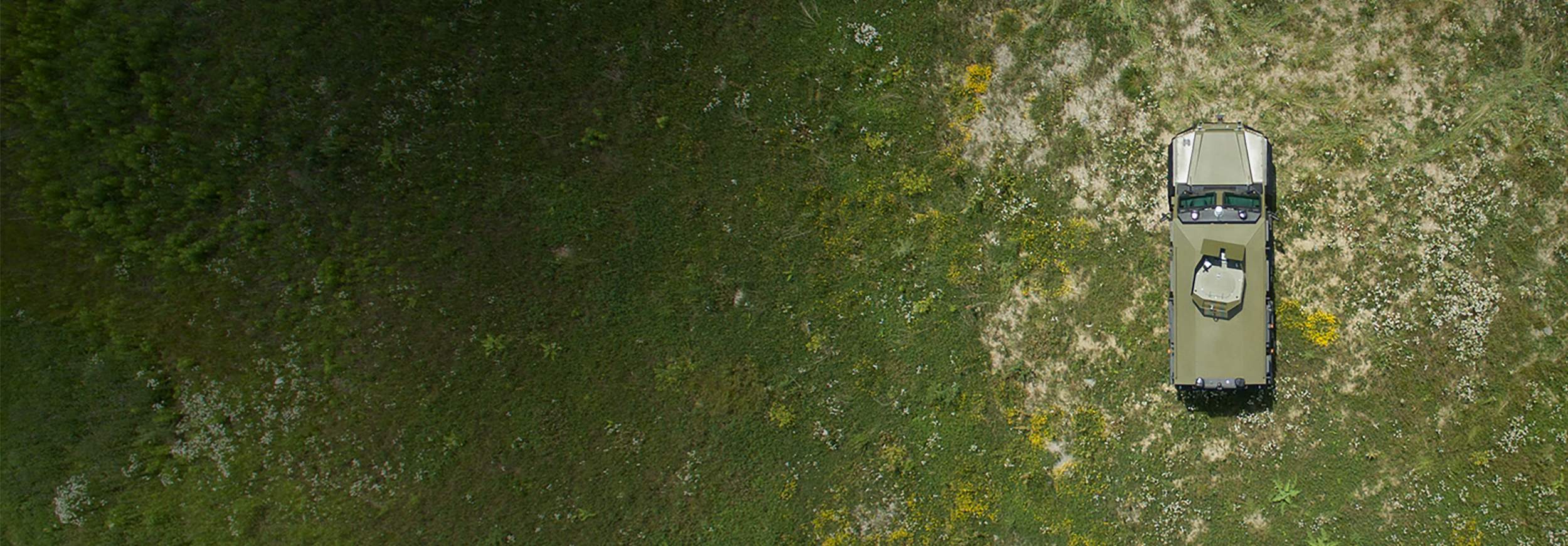
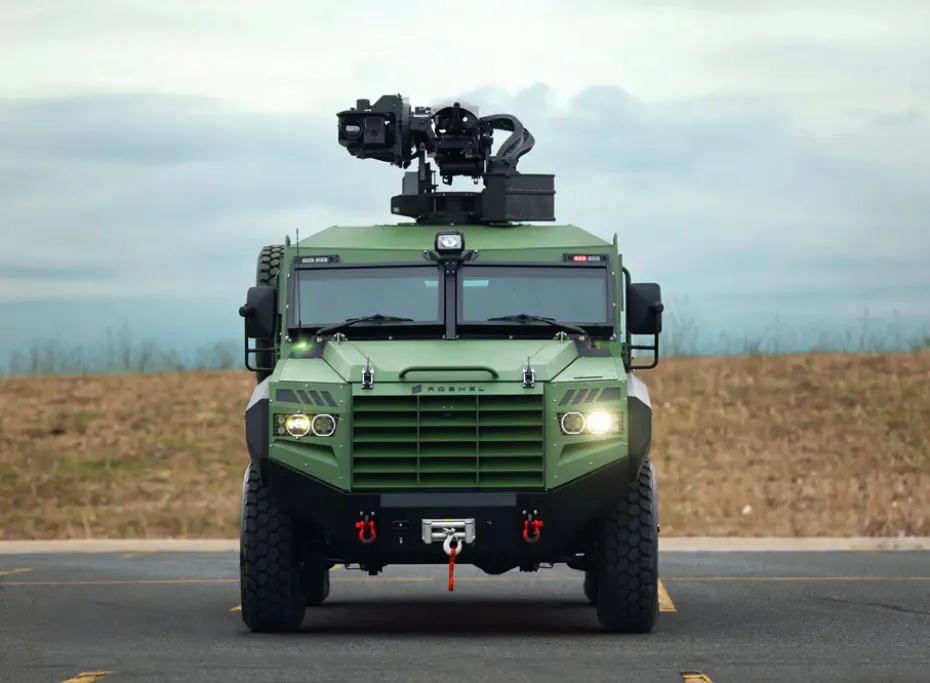
Canada’s continued support for Ukraine has once again highlighted the success of one of the country’s most notable defence manufacturing achievements: the Roshel Senator armoured vehicle. Recent deliveries of additional Senator mine-resistant vehicles to Ukraine underscore the platform’s growing reputation as a battle-proven, Canadian-designed system that has become ubiquitous on Ukrainian battlefields.
Developed by Ontario-based Roshel, the MRAP vehicle incorporates a V-shaped blast-deflecting hull designed to improve crew survivability against mines and improvised explosive devices while maintaining the mobility advantages of a lighter 4×4 platform. It has since rapidly evolved into a diverse family of variants that includes armoured personnel carriers for troop transport, medical evacuation vehicles designed to move casualties under fire, explosive ordnance disposal platforms supporting bomb-disposal teams, command-and-control vehicles equipped for battlefield coordination, and specialized counter-drone configurations intended to detect and defeat emerging aerial threats. Additional versions have also been adapted for reconnaissance and critical infrastructure protection roles.
In practice, this progression has been shaped not only by design intent but by real-world combat employment. Ukraine’s extensive use of the Senator has generated a continuous stream of operational feedback that has helped refine the design. Canadian officials have acknowledged that lessons learned from Ukrainian battlefield experience are feeding directly into vehicle improvements. Yet despite the vehicle’s success overseas, a curious question remains: why has the Canadian Army not acquired the Senator for its own inventory?
Not a Replacement for Frontline Combat Vehicles
There are many valid reasons why the Senator has not become a core Canadian Army combat vehicle. First and foremost, it was not designed to replace platforms such as the Light Armoured Vehicle 6.0. It lacks the heavy armour, firepower, troop-carrying capacity, cross-country mobility, and battlefield networking capabilities expected of a modern mechanized infantry fighting vehicle. While the MRAP variant offers strong protection against mines and ambushes, it remains fundamentally a protected mobility platform rather than a front-line combat system.
The Senator’s commercial truck-based design also creates limitations. Although this approach lowers costs and simplifies maintenance, it does not offer the same off-road performance as purpose-built military vehicles. In high-intensity combat against peer adversaries, Canadian Army formations would still require heavily protected tracked and wheeled combat vehicles. These shortcomings help explain why the Senator has not emerged as a candidate to replace Canada’s existing armoured fighting vehicle fleet.
But Does the Army Need a Different Kind of Vehicle?
However, while all of these criticisms are true, Roshel’s premier platform was never meant to take over the responsibilities of the LAV 6.0. The more relevant question, therefore, should be whether the Canadian Army is overlooking a capability gap that the Senator could help fill as a complementary vehicle.
Many modern military tasks do not require a heavily armed LAV. Force protection, rear-area security, convoy escort, base defence, route patrols, military police operations, domestic emergency response, and liaison missions often demand a vehicle that is protected, mobile, and affordable rather than heavily armed.
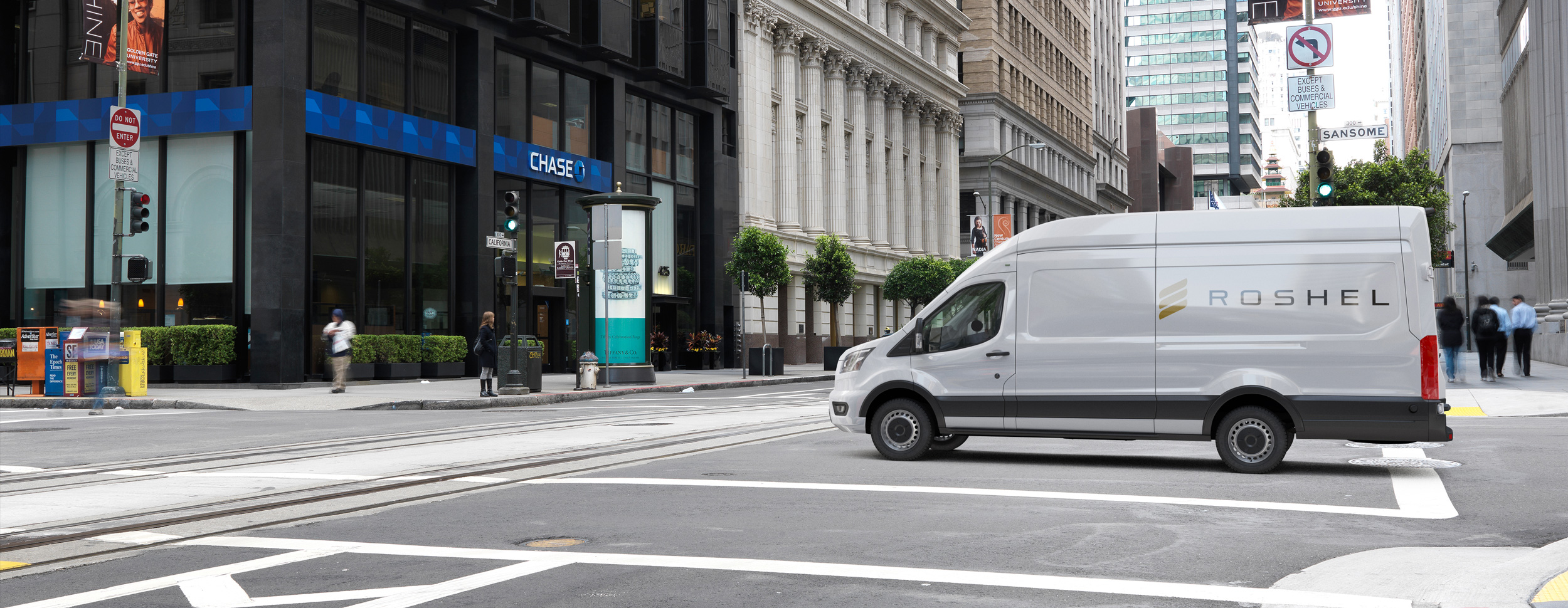
This is where the Senator could offer significant value. Roshel markets the platform for border security, law enforcement, command-and-control, medical evacuation, and protected personnel transport roles. The vehicle’s relatively compact dimensions, good road mobility, and suitability for urban environments make it particularly attractive for security and stabilization missions.
For Canadian Army Reserve units tasked with domestic operations, force protection, and infrastructure security, a fleet of Senators could provide a protected mobility capability at far lower cost than deploying scarce LAVs. The vehicle could also support military police, base security forces, and rapid-reaction elements responsible for defending key installations. Furthermore, beyond security roles, the Senator could prove valuable during disaster response and humanitarian assistance operations, both within Canada and on overseas deployments, where robust mobility, communications, and command-and-control capabilities are often required in damaged or unstable environments.
More broadly, many of the same capabilities that make the vehicle useful for emergency response and critical infrastructure protection also align closely with emerging military force-protection requirements. This is incredibly important for the Royal Canadian Air Force given its growing need to secure high-value assets and critical airbases.
As the RCAF introduces new F-35 fighters and other high-value platforms, it has identified the need for a major expansion of its security forces. Senator vehicles could provide protected perimeter patrols, rapid-response capabilities, convoy escort, and counter-intrusion operations at bases such as Cold Lake and Bagotville. Equipped with surveillance systems, remote weapon stations, or counter-drone technology, the vehicle could serve as a mobile force-protection platform for Canada’s future fighter fleet, including any future mixed force structure that might incorporate aircraft such as the Gripen. The same capabilities would also be useful during deployed NATO and expeditionary air operations abroad.
Armed Variants Expand Utility
If such missions highlight the Senator’s utility at home, its potential value on overseas deployments may be even more significant. While often described as an armoured transport vehicle, the Senator can be configured with a variety of weapon stations and mission equipment.
Operational imagery from Ukraine has shown Senator variants fitted with M2 heavy machine guns, automatic grenade launchers, anti-tank missiles, and advanced counter-UAS and electronic warfare systems. Beyond defensive and security-oriented configurations, Roshel has also showcased its mobile mortar system, demonstrating the platform’s potential to provide mobile indirect-fire support while retaining the protection and mobility characteristics of the broader Senator family.
Such configurations would be particularly relevant for contemporary expeditionary operations where threats often come from drones, ambushes, and irregular forces rather than enemy armoured brigades. They also demonstrate that the platform can provide more than simply protected transportation, giving commanders a flexible vehicle capable of performing a wide range of security and combat-support tasks.
Potential Uses in the Middle East
In terms of a suitable theatre of operations, the Senator could be deployed to the Middle East where the Canadian Armed Forces continue to support multinational security efforts through training, advisory, and counterterrorism missions.
In these environments, the vehicle could provide protected mobility for trainers, liaison teams, force-protection detachments, and convoy security elements. The platform’s mine-resistant design also addresses one of the primary threats encountered during counterinsurgency and stabilization operations: roadside bombs and improvised explosive devices.
Rather than deploying expensive mechanized combat vehicles for every task, Senators could perform routine security patrols, escort missions, and infrastructure protection duties while preserving higher-end combat assets for more demanding operations.
The platform could be particularly useful for missions similar to Canada’s past and present contributions in Iraq and the broader region. Senators could escort advisor teams operating between bases, provide security for training facilities, protect logistics convoys, conduct route-clearance support patrols, and secure forward operating locations against insurgent attacks. Armed variants equipped with heavy machine guns or remote weapon stations could also support quick reaction forces responding to attacks on coalition facilities, while counter-drone variants would be increasingly relevant against the growing unmanned aerial threats seen across the region.
Relevance in the Western Hemisphere
The vehicle could be equally useful closer to home within the Western Hemisphere. Should Canada expand its security cooperation missions in the Caribbean, Central America, or Latin America, the Senator would be well suited for counternarcotics operations, anti-gang missions, urban security assistance, and partner-force training.
Recent deliveries of Roshel armoured vehicles to Haiti illustrate the type of environments where such platforms can be effective. In densely populated urban areas threatened by organized criminal groups, protected mobility often matters more than heavy armour. The Senator’s combination of ballistic protection, urban maneuverability, and relatively low operating costs makes it attractive for these scenarios.
The vehicle could also prove useful during security-force assistance missions focused on combating transnational criminal organizations, protecting critical infrastructure, and supporting partner nations confronting heavily armed gangs or drug cartels. These missions often require protected patrol and transport vehicles rather than traditional infantry fighting vehicles.
In practical terms, Senator-equipped Canadian personnel could support counternarcotics operations along smuggling corridors, provide protected mobility for advisory teams working with local security forces, conduct urban patrols in gang-controlled areas, and secure airports, ports, and government facilities during stabilization operations. The vehicle’s relatively compact size would be particularly advantageous in congested urban environments where larger armoured vehicles can be difficult to employ effectively.
A Canadian Success Story Worth Evaluating
Overall, the Senator is not a universal solution, nor should it be viewed as a substitute for Canada’s mechanized combat fleet. It lacks the protection, firepower, and battlefield integration needed for front-line operations against a sophisticated adversary.
However, the vehicle’s extraordinary success in Ukraine raises legitimate questions about whether the Canadian Army is missing an opportunity. At a time when defence budgets face mounting pressure and operational demands continue to expand, a domestically produced, combat-proven protected mobility vehicle could offer an affordable way to strengthen force protection, airbase security for high-value assets such as future F-35s, expeditionary support, domestic response operations, and overseas security missions.
As Ottawa continues funding hundreds of Senator vehicles for Ukraine, the question may no longer be whether the platform is capable. The question is whether Canada should finally acquire some for itself.